
Stories – Personality, honesty and the human side of Circularity Design Conformity Circular Champions | Vicki Leach Design Director Deadgood
Personality, honesty and the human side of Circularity
Design Conformity Circular Champions | Vicki Leach Design Director Deadgood

June 17, 2026
Olivia Aspinall
In collaboration with Design Conformity, I am interviewing leaders, change-makers and mentors within the world of sustainable design.
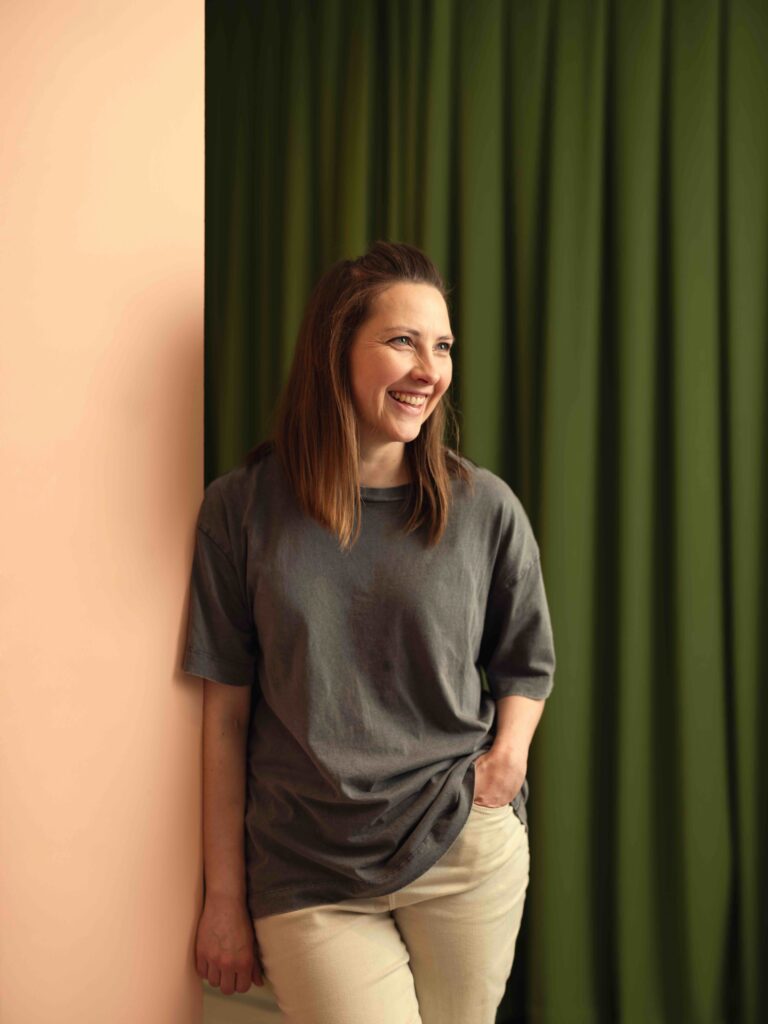
I spoke with Vicki Leach, Design Director at Deadgood, a British furniture brand known for creating playful, personality-led products for workplace and hospitality environments. Alongside designing products herself, Vicki also works closely with external designers to shape and evolve the wider Deadgood collection, always with an eye on maintaining Deadgood’s ethos; of design with personality that is made to last and to be loved.
Circular thinking at Deadgood is deeply embedded within the company’s identity. Rather than treating sustainability as a separate initiative or marketing layer, it has evolved gradually from the brands conception in 2004, through design decisions, local manufacturing relationships and a strong belief that products should create lasting emotional connections with the people who use them.
Many of the ideas Vicki spoke about centred around something often overlooked within conversations about circularity: personality. While circular design is frequently discussed through materials, systems and technical performance, Deadgood’s perspective highlights the importance of designing products people genuinely want to keep. A simple concept, but one that leans deeply into the principles of the circular economy of keeps products in circulation for as long as possible. Their approach suggests that emotional connection can be just as important as recyclability or disassembly in extending a product’s life.
5 LESSONS IN CIRCULAR LEADERSHIP FROM DEADGOOD
1.EMOTIONAL DURABILITY IS A CIRCULAR STRATEGY
A strong theme throughout my conversation with Vicki was the idea that people keep products longer when they feel emotionally connected to them. Long before circularity became a mainstream topic within commercial furniture, Vicki’s own research focused on emotional durability and understanding what makes people continue to value a product after the initial thrill of the purchase has passed.
Rather than creating anonymous workplace furniture, Deadgood has intentionally built a brand around personality, storytelling and recognisable design language. Product names, playful details and distinctive forms all contribute to making furniture feel memorable and human.
This becomes particularly important in commercial environments, where frustratingly often furniture is replaced during refurbishments regardless of whether it still functions well. By creating products that clients and users become attached to, Deadgood aims to increase the likelihood that pieces are retained, refurbished or reused rather than discarded.
Longevity is created through technical durability, but emotional attachment gives us a deeper desire to care about what happens to the products we own.
2. CIRCULAR DESIGN DOES NOT HAVE TO LOSE PERSONALITY
Early sustainable products were often visually coded in a very obvious way. Recycled materials were expected to look recycled, and sustainable products frequently prioritised ethics over aesthetics.
Deadgood deliberately challenged and played with that idea.
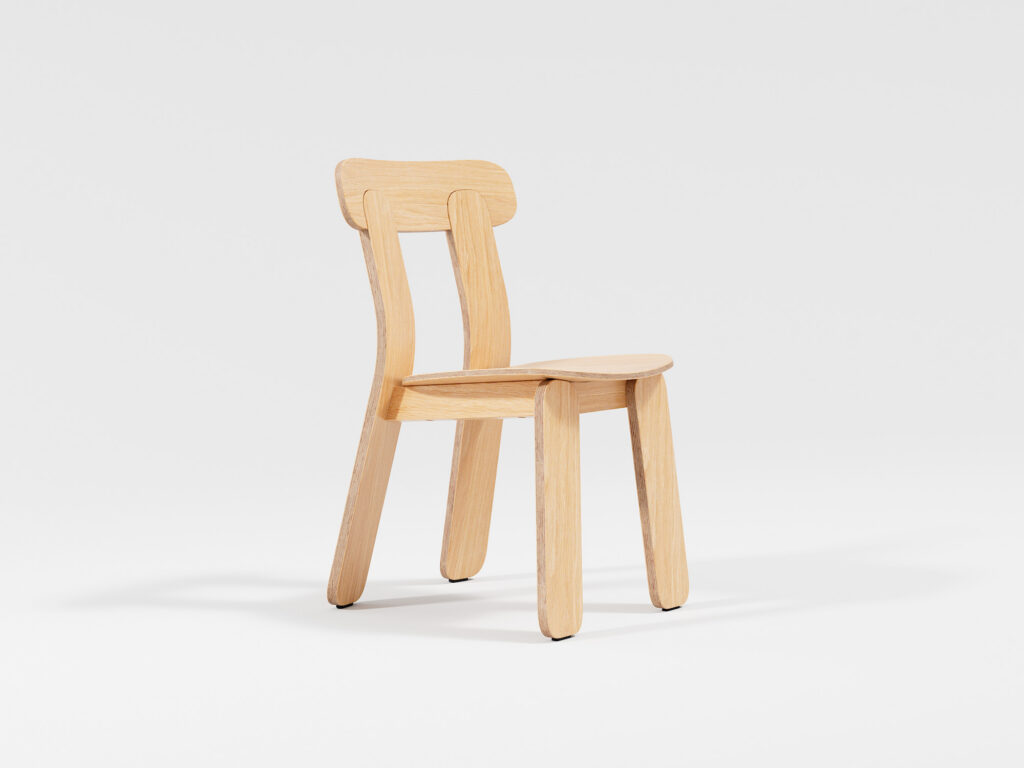
As Vicki described, products such as the Noodle chair became important internally because they demonstrated that a product could embrace circular principles without sacrificing character or visual impact. Their goal was not to create furniture that simply looked sustainable, but furniture that people genuinely desired.
At the same time, Vicki noted an interesting shift within the market.
Increasingly, clients now want products that visibly communicate recycled content or sustainable credentials, often through materials that visibly display reused elements or textures.
This creates an interesting tension within circular design. Should sustainability be quietly embedded into products, or should it be visibly expressed?
Deadgood’s work seems to sit somewhere between the two, combining thoughtful construction and material choices with a strong visual identity.
“It didn’t have to be boring to be sustainable.”
— Vicki Leach
3.SIMPLICITY AND HONEST MATERIALS OFTEN LEAD TO BETTER OUTCOMES
Circularity can feel highly technical and overwhelming, however time and again simplicity within design and materials choices becomes solution to this.
Many of Deadgood’s more circular products are based around straightforward principles: reducing unnecessary components, designing for disassembly, using honest materials and making products easier to repair or refurbish over time.
Their Working collection is a key example of this thinking. By stripping back traditional upholstery techniques and eliminating unnecessary fixings and hidden components, the collection explores how furniture could be constructed openly and simply, yet retain a strong design language.
At the same time, Vicki was very open about the challenges that come with material selection and supply chains. For companies working across multiple materials and suppliers, understanding the true environmental impact of products can become incredibly complex.
Some of the most effective solutions were not necessarily the newest or most innovative materials, but widely recycled and well-established materials such as steel, aluminium and timber.
This reflects a broader lesson within circular design: progress does not always come from inventing entirely new systems, but often from applying existing materials and processes more thoughtfully.
4.CIRCULAR PROGRESS DEPENDS ON COLLABORATION AND TRANSPARENCY
Deadgood’s circular approach succeeds due to close relationships with suppliers, manufacturers and collaborators.
Because the business has remained relatively small and agile, they have been able to build long-term partnerships with local manufacturers who support experimentation, small production runs and ongoing product development. These relationships allow the business to continuously refine products, challenge processes and improve circular outcomes over time.
Rather than claiming to have solved everything, Deadgood’s approach appears rooted in honesty about where they are in the process and a willingness to keep improving. This openness feels increasingly important within an industry where clients are becoming far more informed and demanding around sustainability data and environmental claims.
5. CIRCULARITY WORKS BEST WHEN IT BECOMES PART OF THE WHOLE SYSTEM
Deadgood’s ReLove scheme, which allows products to be taken back, refurbished, refinished and reupholstered, is an example of how Deadgood are considering the full life cycle of their products and looking for solutions for extending that life. In many cases, commercial furniture is removed because of cosmetic wear or changing interior schemes rather than because the product has structurally failed. The framework and core materials often still have years of life left in them and processes like re-powder coating or re-upholstery allow that life to be extended significantly.
More clients are beginning to recognise refurbishment and reuse as realistic and commercially beneficial options rather than compromises. As awareness grows, circular systems become easier to implement because customers start asking different questions and expecting different outcomes from their furniture.
Vicky spoke about how important communication and storytelling are in this process. Often clients simply do not realise these services exist until the conversation happens.
“People are understanding that they can get the pieces back to us and we can recoat them and refinish them.”
— Vicki Leach
This highlights an important aspect of circular design that goes beyond materials or manufacturing. Circularity also depends on reshaping expectations, building awareness and gradually changing the habits surrounding how products are valued, maintained and replaced over time.
Deadgood’s circular approach is inseparable from its identity as a small, agile and personality-driven brand. Their close relationships with local suppliers and manufacturers allow them to evolve products thoughtfully, while keeping creativity, humour and individuality at the centre of what they do. In a sector that can often feel standardised, Deadgood proves that circular design can still be expressive, human and full of character.