Stories – Designing Better Systems for Circular Retail Design Conformity Circular Champions | Alicia Yague Cerdan from HMY
DESIGNING BETTER SYSTEMS FOR CIRCULAR RETAIL
HMY

09 October, 2026
Olivia Aspinall
5 LESSONS ON CIRCULAR RETAIL DESIGN WITH ALICIA YAGUE CERDAN
In collaboration with Design Conformity, I am interviewing leaders, change-makers and mentors within the world of sustainable design.
Creating more circular products and spaces requires far more than choosing better materials. It demands new ways of thinking, new business models and collaboration between people with very different skills and perspectives.
For this conversation, I spoke with Alicia Yague Cerdan, Sustainability and Innovation Technician at HMY. Four years after graduating with a degree in chemistry, Alicia’s role spans environmental compliance, carbon reporting, material innovation, refurbishment services and circular economy projects. We discussed how scientific thinking, practical collaboration and systems-based problem solving are helping to move circularity beyond individual products and into the everyday reality of retail design.

1 – SUSTAINABLE DESIGN NEEDS DIVERSE EXPERTISE
Alicia’s route into retail design wasn’t a conventional one. After studying chemistry, she joined HMY with little knowledge of the retail sector, initially feeling like an outsider. As she settled into the role, however, she realised that her scientific background offered a valuable perspective, particularly when it came to understanding materials and the role they play within a circular economy.
Rather than focusing solely on the finished product, Alicia approaches materials with an understanding of their composition, performance and potential for reuse.
That perspective now informs a role that stretches far beyond material development, encompassing waste management, environmental reporting, refurbishment services and client collaboration.
Her experience reflects a wider shift across the industry. Delivering more sustainable outcomes increasingly depends on bringing together people with different expertise. Designers, scientists, engineers, manufacturers and sustainability specialists all have a role to play, and some of the most valuable ideas emerge where those disciplines overlap.
‘I kind of learned mainly everything about my job… doing the job… My background has been very useful… understanding the composition of the materials or the science behind it.’
2 – SOMETIMES THE MOST IMPACTFUL PROJECTS ARE THE MOST HIDDEN
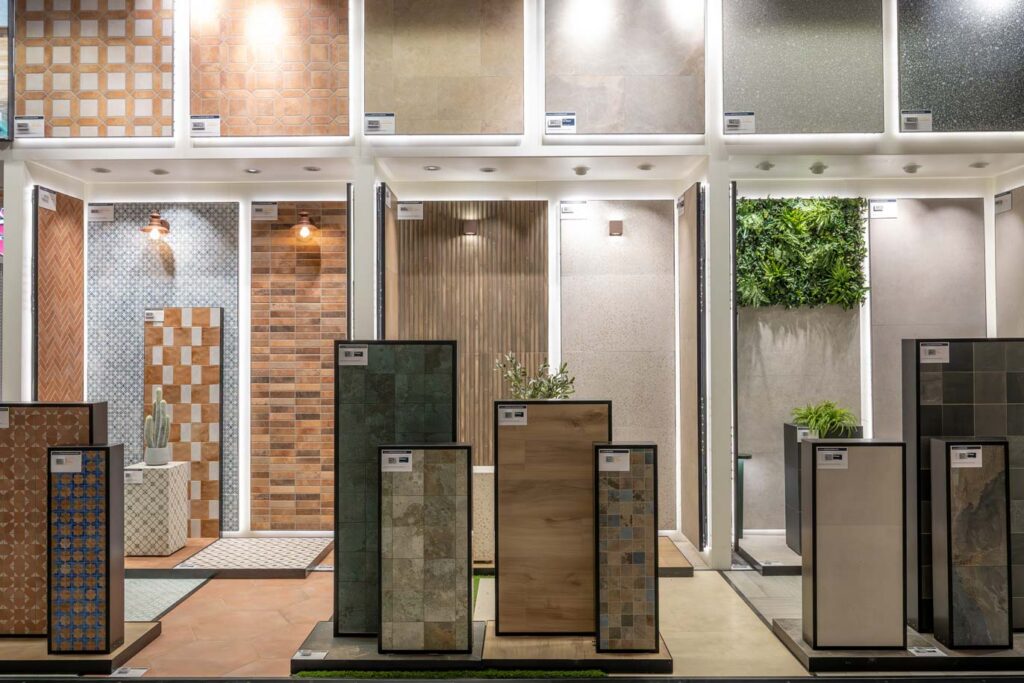
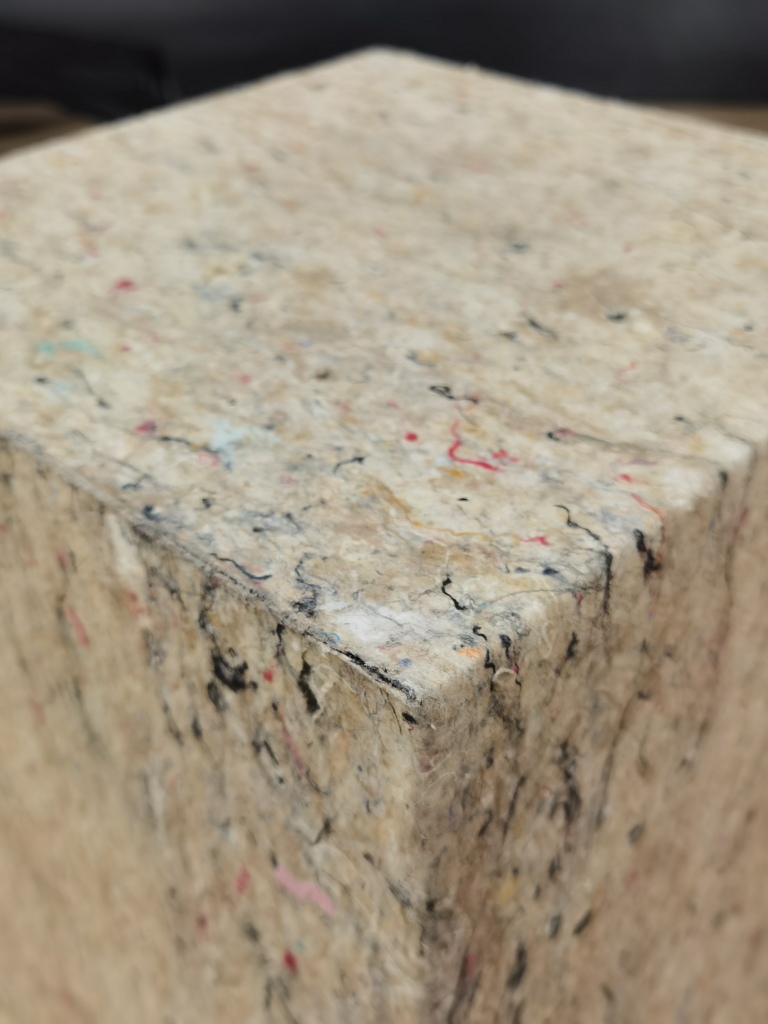
Throughout this series, I’ve explored the value of visible circularity, where recycled materials help tell a story and make sustainability tangible. HMY’s own Re.Vita material is a great example of this, transforming textile waste into a distinctive material that visibly communicates its circular origins.
Alongside these more recognisable innovations, Alicia reminds us that some of the most impactful circular projects are the ones few people ever notice, quietly recovering resources, reducing waste and creating systems that deliver long-term environmental value.
One example Alicia shares is HMY’s work with exhibition carpets. Rather than sending tonnes of carpet to landfill after each event, the material is recovered, processed and transformed into technical flooring panels used beneath future exhibitions. The finished product is rarely seen, but it creates a practical, repeatable use for a waste stream that would otherwise be discarded. More importantly, the project wasn’t simply about creating another recycled product; it established a long-term pathway for recovering and reusing the material.
3 – CIRCULARITY REQUIRES AN ECOSYSTEM OF PARTNERS
One of the strongest messages that came out of my conversation with Alicia was that circularity cannot be delivered by one organisation alone. Recovering materials, developing new products and keeping resources in use requires manufacturers,
waste managers, recyclers, clients and suppliers to work together. HMY describes this as an “ecosystem of partners“, recognising that each organisation plays a different role in making circularity possible.
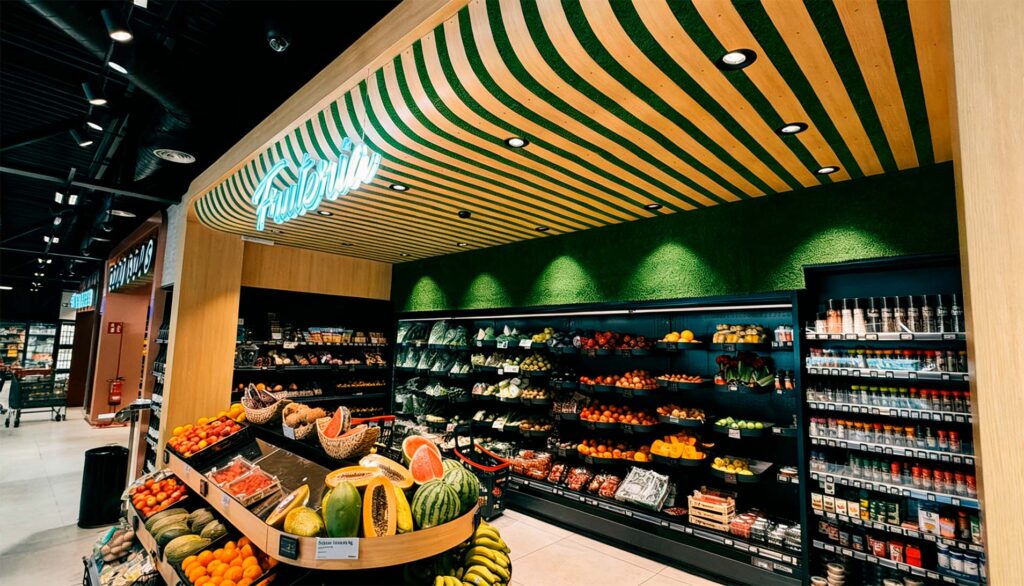
Alicia points to HMY’s work with a Spanish supermarket as an example. Discarded fish boxes are collected by the retailer’s waste management partner, processed into recycled pellets and transformed into shelving and panels for use back in the supermarket. The project established a long-term system for recovering and reusing the client’s own waste, that can be adapted to different scenarios and locations.
These partnerships continue to create new opportunities. Relationships with waste managers have introduced HMY to emerging recycled materials, helped identify new waste streams and enabled projects that would be impossible for one organisation to deliver alone. As Alicia’s work demonstrates, circularity is rarely achieved through individual innovation. It is built through connected networks of expertise.
‘All of our circular economy projects are based on what we call the ecosystem of partners.’
4 – RETAIL IS ENTERING THE SERVICE ERA
Looking ahead, Alicia believes the retail industry is moving beyond simply designing and supplying products.
“I believe we are going into a service era.”
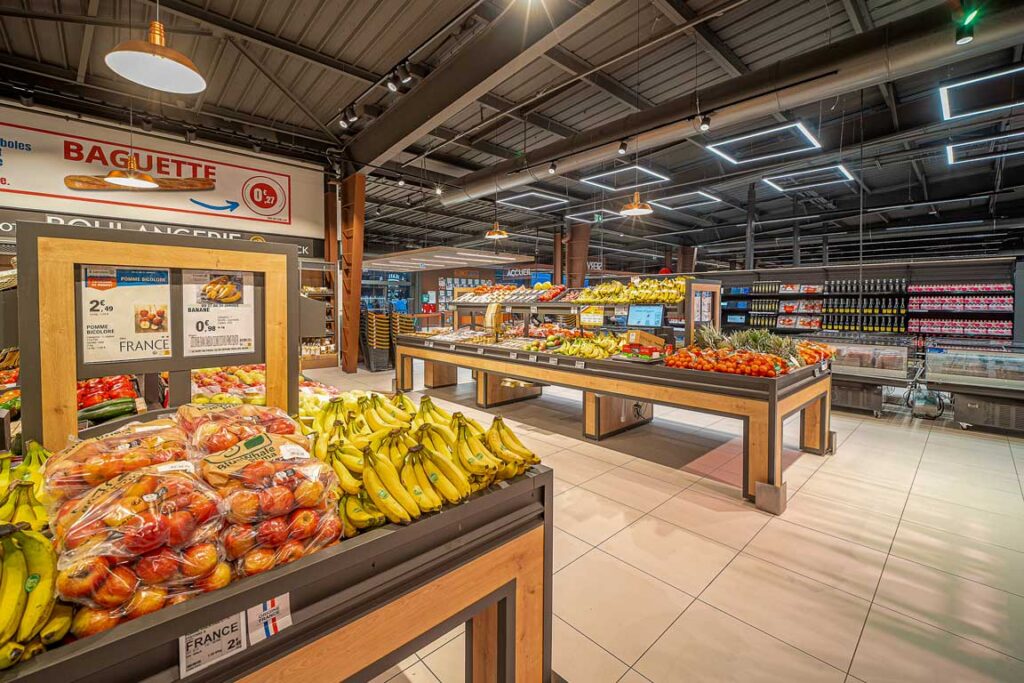
Drawing comparisons with Netflix, Spotify and car rental services, Alicia sees a future where ownership becomes less important than keeping products in use. While retail environments present different challenges, she believes designers will increasingly need to create systems that enable fixtures to be repaired, refurbished, adapted and reused rather than continually replaced.
This thinking is already reflected in HMY’s work, where refurbishment, reuse and take-back services sit alongside material innovation. It signals a shift in the role of design, from creating products with a single life, to creating systems that keep them in use for as long as possible.
5 – THE CIRCULAR ECONOMY NEEDS A NEW WAY OF MEASURING VALUE
While circular materials, refurbishment services and take-back schemes all offer clear environmental benefits, they can still be difficult to justify when decisions are driven by the upfront cost of an individual product.
Using HMY’s Re.Vita material as an example, Alicia explains that while specifying a recycled panel may increase the cost of a single fixture, the impact across an entire retail fit-out can be relatively small as a percentage of the project. Looking beyond the cost of one product allows businesses to consider the wider value created through lower environmental impact, resource efficiency and more circular ways of working.
The challenge for the circular economy is that many of its greatest benefits are difficult to capture on a balance sheet. Circular projects create new partnerships across supply chains, establish long-term pathways for valuable materials, reduce waste, extend product lifecycles and encourage organisations to work more collaboratively. They also help businesses demonstrate environmental leadership and build confidence among clients who are increasingly looking for more responsible ways of designing and delivering projects.
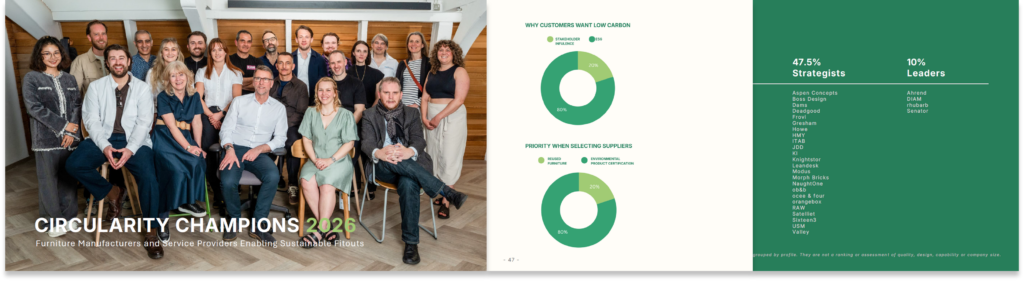
Moving towards a circular economy requires a broader definition of value, that recognises not only the upfront cost of a product, but also its environmental impact, longevity, adaptability and ability to keep materials in circulation. To find out more from our circular champions, read our 2026 report below: