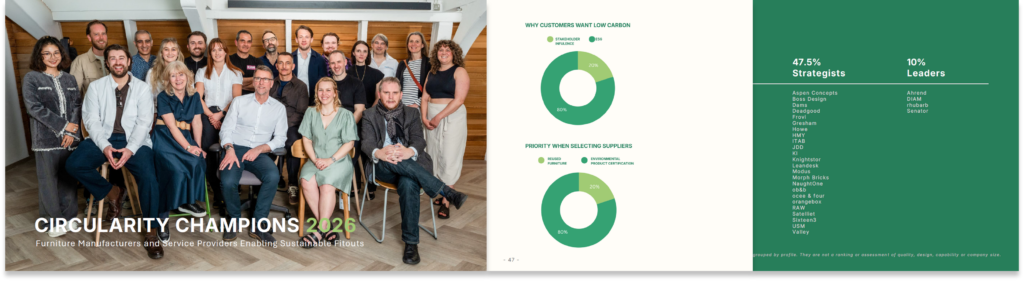
Stories – Craftsmanship, Collaboration and Common Sense Design Conformity Circular Champions | David Matthews & Billy Stone from rhbr
CRAFTSMANSHIP, COLLABORATION AND COMMON SENSE
RHUBARB SEATING LTD

August 28, 2026
Olivia Aspinall
5 LESSONS IN CIRCULAR MANUFACTURING FROM RHUBARB
In collaboration with Design Conformity, I am interviewing leaders, change-makers and mentors within the world of sustainable design.
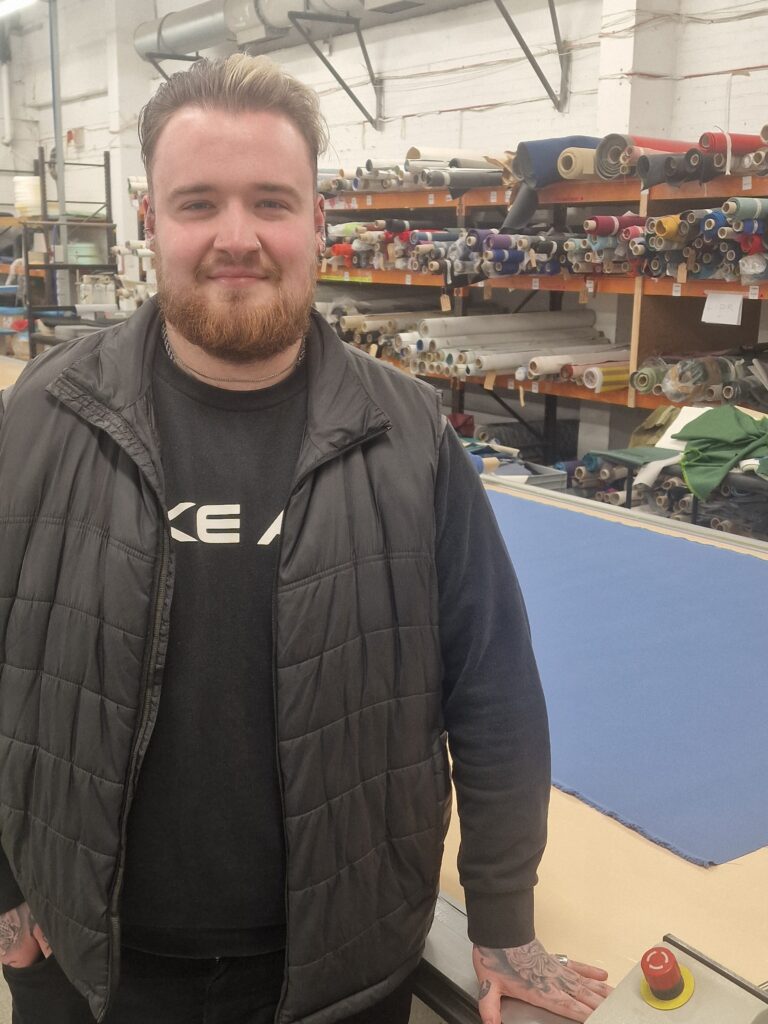
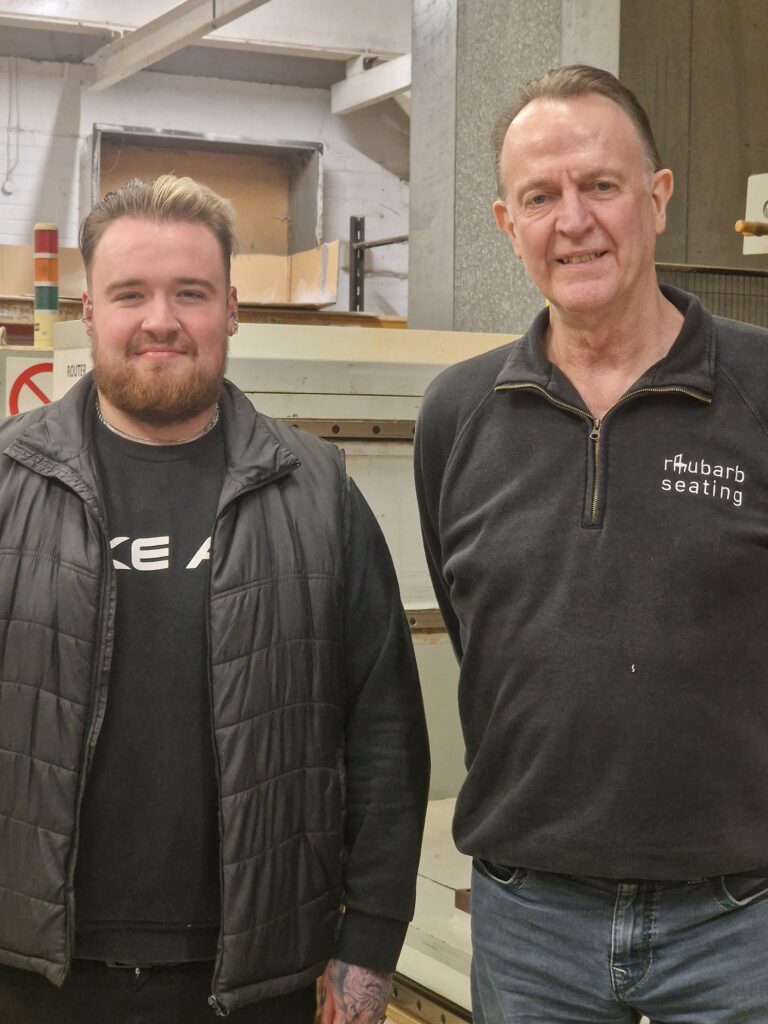
For this conversation, I spoke with David Matthews and Billy Stone from Rhubarb, a British furniture manufacturer specialising in commercial seating and, importantly, re-upholstery. David and his business partner, Alysoun Stewart, founded the company after stepping into a failing furniture business in 2011, while Billy now leads procurement and sustainability within the organisation.
My biggest takeaway from my interview was how naturally circular thinking has evolved and been integrated within the business. Their circular approach comes from a place of integrity, believing in handcraft and quality and investing time and energy into their local community and networks.
David’s route into the furniture industry was unexpected. Before Rhubarb he spent more than two decades restructuring struggling businesses across the UK and Europe. When he was first asked to assess a failing furniture company, the expectation was that it would be closed down. What began as a short-term project to work through a warehouse full of leftover chair components gradually transformed into a manufacturing business built on craftsmanship, repair, and longevity. Over the years the company has invested heavily in equipment, skills, and people.
Reupholstery and refurbishment have become an increasingly important part of the business. Billy now plays a key role in developing the company’s sustainability approach. Working across procurement decisions, waste reduction and carbon tracking.
Throughout the conversation, it became clear that Rhubarb’s circular approach is not driven by marketing or token sustainability language. Instead, it has grown from practical decision-making: designing products that can be repaired, building relationships with local suppliers and building a “because” with integrity.
1 – CIRCULAR DESIGN NEEDS TO START WITH RE-USE AS A KEY DESIGN CRITERION
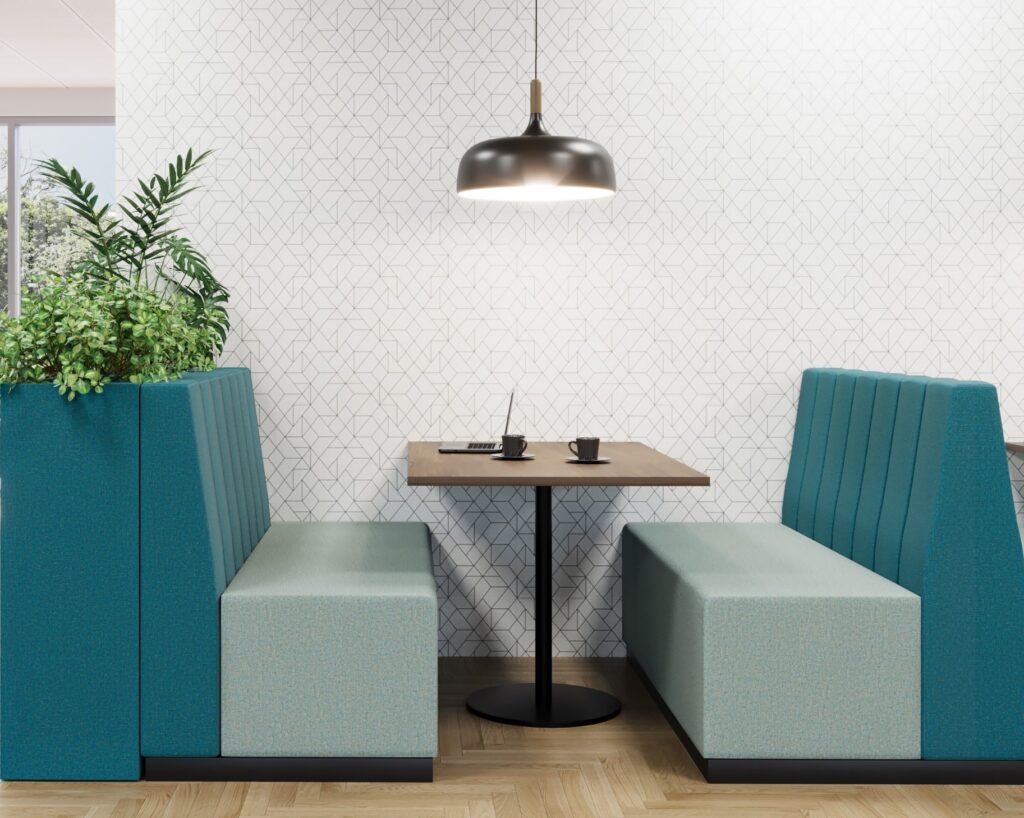
One of Rhubarb’s biggest advantages is the perspective they gain through reupholstery and refurbishment work. By stripping down furniture from many different manufacturers, the team sees first-hand how products behave at the end of their first life.
Some pieces can be dismantled easily and repaired. Others are almost impossible to take apart without damaging the frame or destroying key components. These experiences directly inform how Rhubarb designs and manufactures its own products.
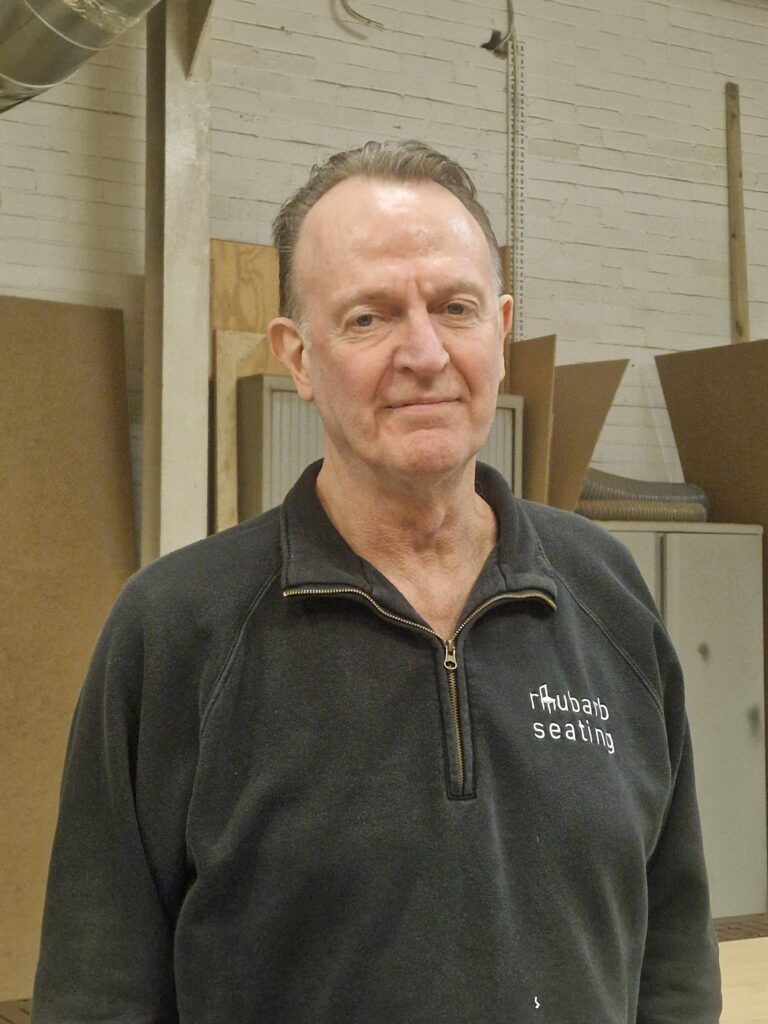
“We always have one eye on what happens at the end of life. When the fabric gets worn out, when the foams get shot, what is the process going to be?” — David Matthews
2 – WASTE OFTEN DISAPPEARS WHEN YOU START TALKING TO PEOPLE
Much of Rhubarb’s waste reduction has not come from formal sustainability programmes, but from building relationships with local businesses and suppliers.
Foam offcuts are returned to suppliers and turned into recycled chip foam. Cardboard boxes that once went to recycling now serve a second life in neighbouring businesses.
Rhubarb even became the bridge connecting high quality discarded pallets with a skilled prison workshop who then produced bench seating for a local school.
These kinds of exchanges have grown naturally through conversations and collaboration between local companies. Proving that connecting people is often the most powerful circularity tool.
3 – CIRCULARITY MANUFACTURING DEPENDS ON SKILLS AS MUCH AS MATERIALS
One of the biggest challenges facing Rhubarb is not design or materials, but people. Skilled upholsterers and sewers are increasingly difficult to find, and traditional apprenticeship routes are not supplying enough new talent.
In response, the company has built a culture of internal training. People from completely different industries have joined the business and developed new skills through hands-on experience guided by their experienced colleagues. Employees are also encouraged to learn multiple roles so the team can adapt to different projects and demands.
“Nobody here stands at the same bench doing the same thing every day.” — David Matthews
4 – RE-USE IS MAKING A COMEBACK
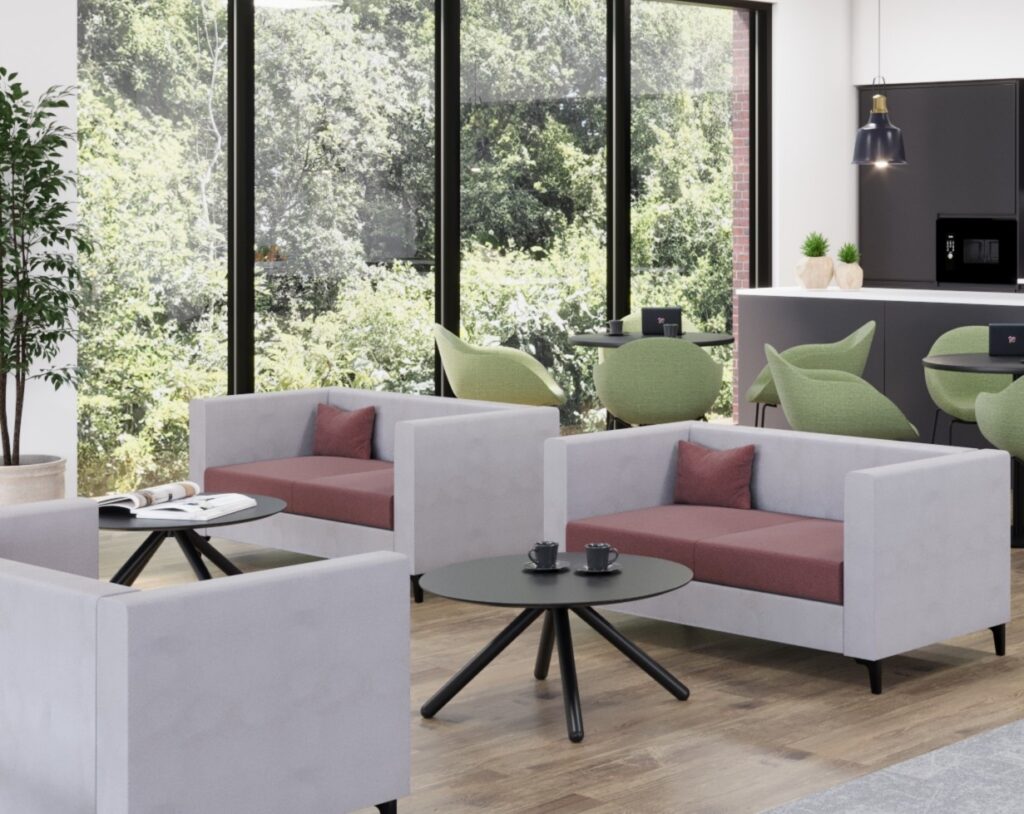
One of the biggest shifts Rhubarb has seen in recent years is the growing demand for refurbishment and reupholstery services.
Traditionally, refurbishment was a normal part of the furniture industry. Over time, however, cheaper imports and faster replacement cycles pushed many organisations toward buying new rather than repairing existing products.
That pattern now appears to be shifting. Increasingly, large organisations refurbishing their offices are being asked to retain and reuse a percentage of existing furniture rather than replacing everything out right. For Rhubarb, this has led to a rapid growth in refurbishment work over the last few years.
“It’s really been the last two or three years where reupholstery has absolutely exploded.” — David Matthews
5 – THE BIGGEST BARRIER TO CIRCULARITY IS STILL COST PERCEPTION
Despite growing interest in refurbishment and reuse, cost remains one of the biggest barriers to circular approaches.
Many clients initially expect refurbished furniture to cost far less than buying new. In reality, properly stripping down, repairing, and rebuilding a piece of furniture is labour intensive and skilled work.
The organisations that understand this are willing to invest in quality and longevity for a better product and a more cost effective solution in the long term and, crucially, keeping products out of landfill. Not one gram of waste from either new production or re-upholstery work finds its way from Rhubarb to landfill.