Progress Through Practical Action. Design Conformity Circular Champions | Harry Hill
PROGRESS THROUGH PRACTICAL ACTION
SHOWCASE INTERIORS

September 07, 2026
Olivia Aspinall
5 LESSONS IN CIRCULAR LEADERSHIP FROM HARRY
In collaboration with Design Conformity, I am interviewing leaders, change-makers and mentors within the world of sustainable design. As Group Head of Sustainability & Social Impact at Showcase Interiors, Harry Hill is helping shape the sustainability strategy of one of the UK’s leading workplace fit-out specialists. Working across procurement, supply chains, carbon reporting and project delivery, his role is centred on embedding sustainability into the day-to-day realities of delivering commercial interiors.
Unlike many sustainability professionals working within workplace interiors, Harry’s career began within construction and infrastructure. That experience gives him a systems-led perspective, one that focuses less on individual products and more on the processes, people and supply chains that shape the environmental impact of every project.
Showcase Interiors has built a reputation for delivering high-quality workplace interiors across the UK, with sustainability and social impact now forming an increasingly important part of the business. Harry’s role is helping translate those ambitions into practical action, working across projects, procurement and the wider supply chain to drive meaningful change.
Harry’s approach is practical and system focussed, believing meaningful progress comes from collaboration, experimentation and a willingness to keep moving forward, even when every solution has not yet been found.

1 – SUSTAINABILITY SUCCEEDS WHEN IT MAKES COMMERCIAL SENSE
We know that sustainability cannot exist in isolation from the realities of business.
Within the commercial fit-out sector, projects are shaped by budgets, programmes, procurement requirements and client expectations.
While environmental ambition is growing, every decision must still be commercially viable. Lasting change only happens when sustainability is integrated into the way a business operates, rather than treated as a separate initiative.
When sustainability is embedded into the way a business functions, it becomes another lever for creating better design and better outcomes. It encourages teams to think differently about materials, procurement, logistics, resource efficiency and collaboration, often revealing opportunities that might otherwise be overlooked.
Sustainable design and sustainable business models are not competing priorities. Together, they create businesses that are more resilient, more efficient and better equipped to respond to the changing expectations of clients, legislation and the more volatile world we find ourselves in.
2 – SUPPLY CHAINS ARE A POWERFUL DRIVER FOR CHANGE
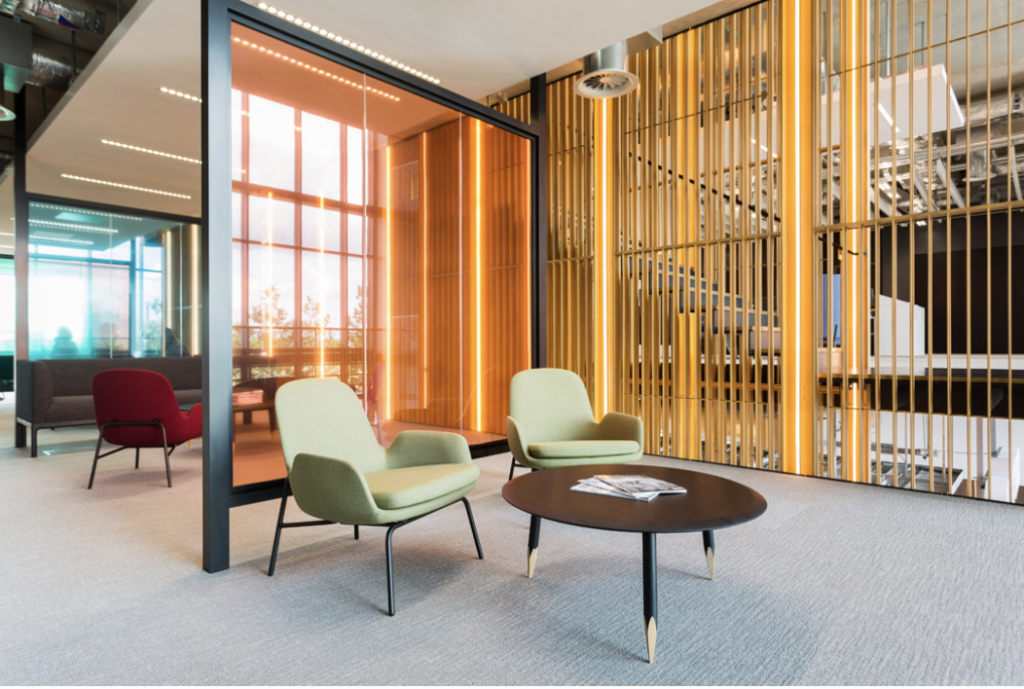
Working within commercial fit-out means Harry is not responsible for a handful of suppliers, but for a network of more than 600 specialist manufacturers and partners. His role is about positively influencing that network and creating the conditions for continual improvement.
By introducing environmental criteria into procurement and supplier engagement, Showcase give their supply chain something tangible to work towards. Where possible, this also means encouraging more local sourcing, while balancing the realities of working with large global manufacturers and established supply chains. The aim is to continually improve the system as a whole.
Harry sees collaboration and transparency as essential. Too often, traditional ways of working are built around secrecy and competition, yet many of the environmental challenges facing the industry are shared and require shared solutions. Creating spaces where organisations can openly discuss successes, failures and lessons learned helps raise standards across the sector, while a healthy level of competition can also encourage suppliers to want to continually improve their environmental performance.
“We’re all dependent on each other.”
Showcase’s environmental procurement standards one of their most powerful tools available for influencing behaviour, driving innovation and creating lasting environmental change throughout the supply chain.
3 – START WITH WHAT ALREADY EXISTS
One of the biggest opportunities for reducing the environmental impact of a project comes before a single product has been specified.
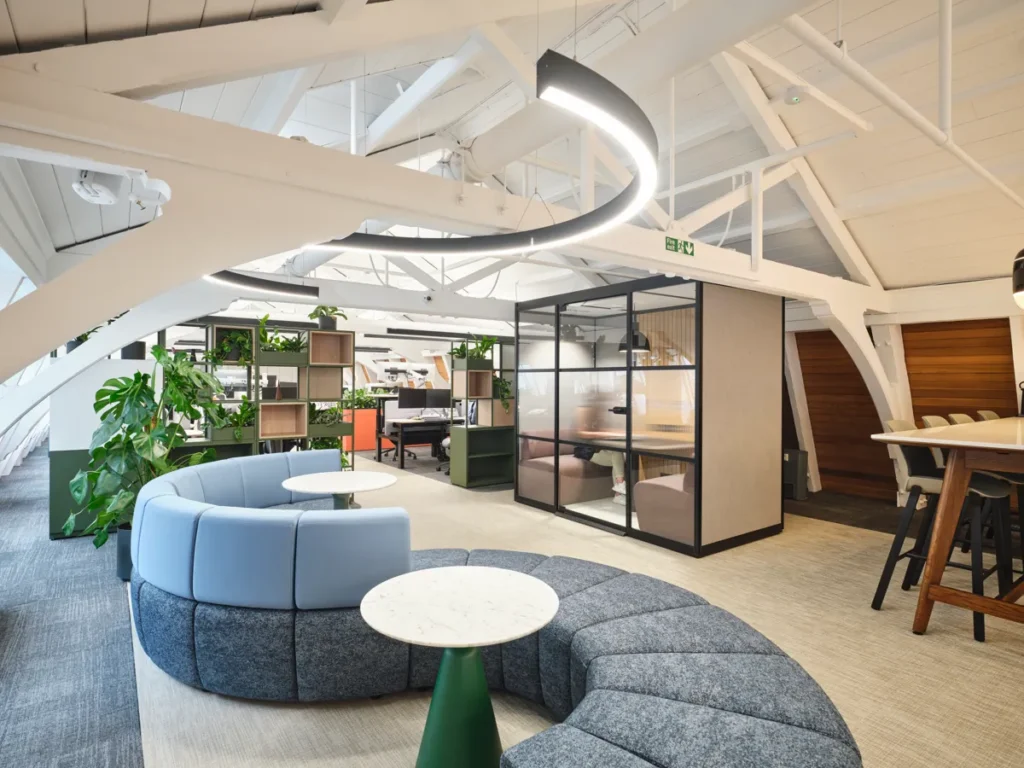
Every project should begin by understanding what resources already exist. Rather than assuming all furniture will be replaced, Showcase starts by auditing existing furniture and fittings to identify what can be retained, refurbished or relocated. This simple shift in approach challenges the traditional fit-out model, where replacement is often seen as the default.
Starting with an audit not only reduces waste, it frequently unlocks commercial benefits too. Reusing existing furniture can significantly reduce project costs, allowing clients to reinvest part of that budget into higher quality, longer-lasting products where new purchases are genuinely required. Sustainability and commercial value become mutually reinforcing, rather than competing priorities.
4 – CHANGE STARTS WITH A WILLINGNESS TO EXPERIMENT
Driving meaningful change requires more than ambition. It requires organisations to test new ideas and challenge established ways of working
Creating meaningful change does not always require radical innovation. It requires organisations that are willing to take informed risks, remain persistent and continually build on what they learn.
“It’s not innovation, it’s try and try and try and something will work and something will click.”
Organisations that are willing to keep testing, refining and improving are often the ones that drive the industry forward. Rather than waiting for perfect answers, they create a culture where ideas can be trialled, lessons can be shared and progress becomes part of everyday business.
This willingness to experiment is one of the qualities that helps businesses such as Showcase emerge as leaders. In an industry facing significant environmental challenges, progress comes from organisations prepared to challenge convention and the status quo.
5 – COLLABORATION BUILDS CONFIDENCE TO ACT
Driving sustainability can often feel like a lonely role. Changing legislation and increasing client expectations mean many organisations are navigating unfamiliar territory, often without a clear roadmap.
Harry spoke about the importance of building relationships across the industry; share knowledge, sense-check ideas, discuss common challenges and learn from one another’s experiences.
Bringing together designers, manufacturers, contractors and clients quickly reveals that many organisations are facing the same barriers.
“We’re all talking about the same thing, we’ve all got the same issues.”
Collaboration helps reduce the perceived risk of trying something new. There is value in developing case studies collectively, bringing together manufacturers, designers and commercial partners to test ideas and demonstrate what is possible. Sharing both successes and lessons learned gives others the confidence to move forward, helping good ideas spread more quickly across the industry.
Collaboration is not about giving away a competitive advantage. It is about recognising that many of the industry’s biggest sustainability challenges are shared, and that progress happens much faster when organisations are prepared to learn from one another.
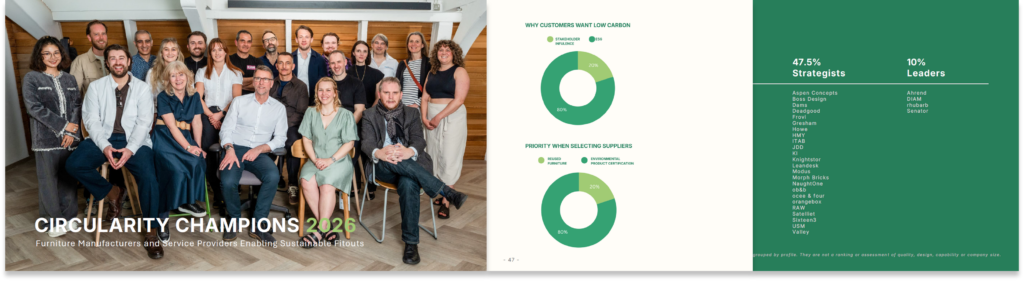
I really enjoyed my conversation with Harry. He has a clear understanding of the realities and commercial pressures facing the fit-out sector, while maintaining an enthusiasm and ambition to keep driving positive change. He comfortably straddles the role of commercial voice of reason and advocate for better environmental practice, recognising that meaningful progress comes from working within the realities of business rather than outside them. It is this balance that makes his perspective both practical and inspiring. To find out more about our Circular Champions, download our 2026 report below: