Making Sustainability Part of Every Day Business Design Conformity Circular Champions | DAMS
MAKING SUSTAINABILITY PART OF EVERYDAY BUSINESS
DAMS

September 22, 2026
Olivia Aspinall
5 LESSONS IN EMBEDDING SUSTAINABILITY ACROSS A BUSINESS FROM DR MOLLIE FROST
In collaboration with Design Conformity, I am interviewing leaders, change-makers and mentors within the world of sustainable design.
For this conversation, I spoke with Dr Mollie Frost, Sustainability & Environmental Coordinator at DAMS. With a background in environmental science and carbon reduction, Mollie’s role spans carbon reporting, procurement, supplier engagement, product development, packaging, fleet and environmental strategy. Her work offers an interesting perspective on what it takes to embed sustainability across a business, bringing people with different roles and expertise into the process.

1 – SUSTAINABILITY SHOULD TOUCH EVERY PART OF THE BUSINESS
Mollie’s role at DAMS reaches across almost every area of the business. Carbon reporting, packaging, procurement, transport, energy, design, product development and supplier engagement all sit within the sustainability conversation at DAMS. Each area brings different environmental impacts, but also different opportunities for improvement.
Working across so many areas means sustainability cannot operate effectively in isolation. Progress relies on collaboration with the people responsible for those individual parts of the business, understanding their priorities and working together to identify where changes can realistically be made.
The ‘Green Team’ at Dams is one practical example of this. Bringing people from different areas of the business together creates a regular space to discuss challenges, share ideas and understand what is happening beyond individual departments.
It also helps build relationships between people who might otherwise be working on very different parts of the same sustainability challenge. This breadth is one of the things I found particularly interesting about Mollie’s role. Sustainability becomes a point of connection across the business, linking decisions around products and materials with purchasing, operations, logistics and ultimately the company’s wider business goals.
2 – EDUCATION CREATES ENTHUSIASM
Introducing new sustainability targets, training or processes can sometimes be met with questions or resistance. This is understandable when people are being asked to change familiar ways of working without necessarily being given solid reasons for why.
Taking the time to explain the reasoning and science behind environmental decisions can make a significant difference.
Mollie talks about conversations that begin with uncertainty but end with people understanding why something is being asked of them and becoming much more interested in the subject.
“By the end of the conversation most people are like, ‘Oh, I didn’t know that.’”
This is where education becomes an important tool for change. Better understanding can create greater engagement and give people the confidence to participate and lead rather than simply follow instructions.
3 – UTILISE THE EXPERTISE ALREADY WITHIN YOUR BUSINESS
One of the greatest resources available to any sustainability team is the knowledge that already exists within the business. Different departments and individuals have developed highly specific expertise within their own areas, often built through years of working directly with particular products, processes, materials and suppliers.
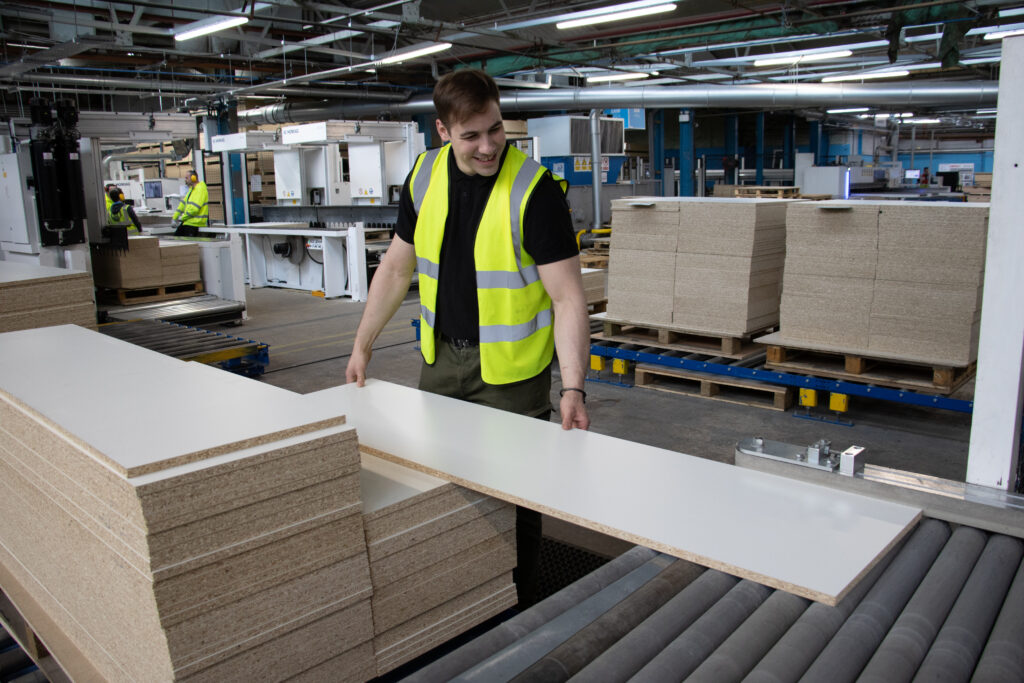
DAMS’ Green Team meetings and conversations across departments create opportunities to bring this knowledge into the sustainability conversation. Someone working directly with machinery or manufacturing will understand their processes in a level of detail that would be difficult to replicate elsewhere, while teams working in purchasing, logistics or product development bring entirely different perspectives and experience.
Rather than expecting sustainability teams to have all the answers, there is huge value in asking the people who know their particular area best. Bringing together these individual pockets of expertise can uncover practical opportunities for environmental improvement that might otherwise never be identified.
4 – CIRCULARITY STARTS WITH WHAT THE CUSTOMER ALREADY HAS
Across these industry interviews, reuse and refurbishment have emerged again and again as an important part of the shift towards a more circular furniture industry. Rather than beginning every project with the assumption that new products are required, there is a growing opportunity to first understand what a customer already owns and what could be retained, repaired, adapted or remanufactured.
DAMS’ ReThink service puts this thinking into practice. Furniture can be collected and assessed, with products in good condition reused and others repaired or remanufactured.
One project Mollie discussed involved recovering existing furniture and giving it a second life rather than replacing it. The starting point was not necessarily about what can be supplied but what does the client already have and working up from there.
“They’ve literally already got the stuff already in the office. It just needs a bit of a boost.”
Working in this way requires more flexibility than simply specifying from a catalogue. Every project and existing furniture inventory will be different, so reuse becomes partly a problem-solving exercise: understanding what has value, what can realistically be adapted and where new products are genuinely required.
DAMS is also seeing increased demand for its recycling solutions as more businesses take a sustainable approach to office refurbishment. Reuse and refurbishment are becoming part of a broader service offer, giving clients more options for managing the furniture they already own rather than replacement remaining the automatic starting point.
5 – BETTER DATA LEADS TO BETTER DECISIONS
Good environmental data is becoming increasingly important, both for businesses trying to understand their own impact and for customers trying to make more informed choices.
Carbon reporting, supplier information and Environmental Product Declarations (EPDs) can help identify where the biggest impacts sit and where improvements could have the greatest effect. They can also give customers clearer information about embodied carbon and the environmental impact of the products they are specifying.
“I’d really like to make transparency a really big focus… allowing our customers to make decisions.”
The value of this information is not simply in producing another report or environmental claim. Used well, it can inform purchasing, product development and specification, allowing environmental performance to become another practical part of the decision-making process.
I really enjoyed my conversation with Mollie and the practical perspective she brings to embedding sustainability within a business. While innovative products and ambitious environmental targets have an important role to play, much of the work happens through smaller everyday decisions, conversations and improvements across an organisation.
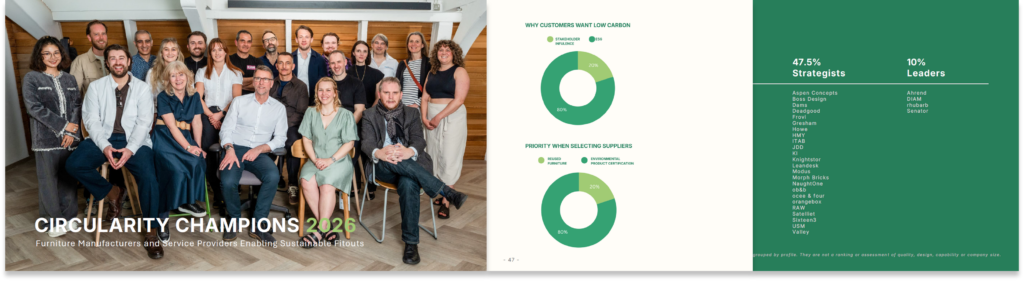
Creating this kind of change requires people to understand why sustainability matters, have access to better information and feel able to contribute their own knowledge and ideas. Sustainability may have a dedicated role or team driving it forward, but the greatest impact comes when responsibility and understanding begin to spread throughout the business. To find our more about our Circular Champions, read our 2026 report below: